The LORD is with you

10 For I hear many whispering. Terror is on every side! “Denounce him! Let us denounce him!” say all my close friends, watching for my fall. “Perhaps he will be deceived; then we can overcome him and take our revenge on him.”
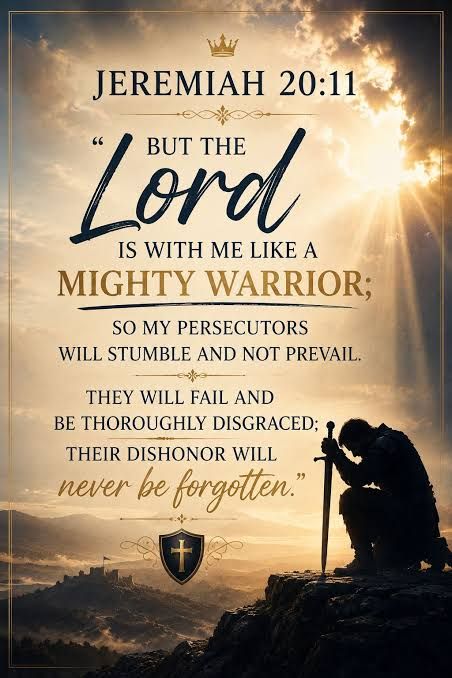
11 But the Lord is with me as a dread warrior (גִּבּוֹר עָרִיץ — gibbor arits); therefore my persecutors will stumble; they will not overcome me. They will be greatly shamed, for they will not succeed. Their eternal dishonor will never be forgotten.
12 O Lord of hosts, who tests the righteous, who sees the heart and the mind, let me see your vengeance upon them, for to you have I committed my cause. — Jeremiah 20:10–12 (ESV)
1. Development and Adaptation of the Hebrew Script: Pictographic Origins to Post-Exile
What is loosely termed "paleolithic" or earliest pictographic Hebrew corresponds historically to three attested stages of the Hebrew alphabet:
- Proto-Sinaitic / Early Canaanite Pictographs (c. 1800–1200 BC): Concrete pictograms representing physical objects whose initial consonant gave each letter its sound (the acrophonic principle).
- Pre-Exilic Paleo-Hebrew (c. 1000–586 BC): As writing migrated into formal royal and prophetic use across Israel and Judah, those pictographs adapted and changed into the linear Old Hebrew script used during the monarchy and throughout Jeremiah’s own lifetime (attested on the 10th-century BC Gezer Calendar, the 8th-century BC Siloam Inscription, and the late 7th/early 6th-century BC Lachish ostraca and seals written by contemporaries of Jeremiah and his scribe Baruch, Jeremiah 36:4).
- Post-Exilic Square Script (Ktav Ashuri, 5th century BC onward): Following the Babylonian exile, the visual form of the letters transformed as Judah adopted and adapted the Imperial Aramaic square script (traditionally associated with Ezra the scribe). Scribes developed standardized final letter forms (sofit) and later added vowel points (niqqud) in the Masoretic Text to preserve exact pronunciation without altering a single inspired consonant.
A safeguard against modern bias: Centuries-tested Hebrew grammarians (Ibn Janah, David Kimhi, Wilhelm Gesenius, and Brown-Driver-Briggs) recognize the concrete pictographic origins of individual Semitic letters while rejecting the modern error of inventing word definitions by stringing letter-pictures together. In biblical Hebrew, meaning resides in the triliteral root and is verified by how Scripture uses that root across the canon.
Word 1: גִּבּוֹר (Gibbor) — "Warrior / Mighty Champion" (Strong's H1368)
Derived from the root ג-ב-ר (gabar, "to be strong, prevail, conquer"). In Jeremiah 20:11, it is prefixed by the inseparable preposition כְּ (ke-, "as / like"): כְּגִבּוֹר (kegibbor, "as a mighty warrior"). Reading Hebrew right-to-left:
| Order | Post-Exilic (Square) | Pre-Exilic (Paleo-Hebrew) | Letter Name | Earliest Pictographic Form & Concrete Meaning |
|---|---|---|---|---|
| 1 | ג | 𐤂 | Gimel | Throw-stick / Camel: A curved throwing weapon or camel's neck; signifies lifting up or carrying. |
| 2 | ב | 𐤁 | Bet | House / Tent Floorplan: An enclosed dwelling with an entrance; signifies house, household, or inside. |
| 3 | ו | 𐤅 | Vav (Waw) | Tent Peg / Hook: A wooden peg or bronze hook that fastens and secures; serves here as a vowel letter (o). |
| 4 | ר | 𐤓 | Resh | Human Head: Profile of a head on a neck; signifies head, top, chief, or authority. |
Word 2: עָרִיץ (Arits) — "Dread / Terror-Striking" (Strong's H6184)
Derived from the root ע-ר-ץ (arats, "to tremble, cause to tremble, strike with terror or awe"). In pre-exilic Paleo-Hebrew, there was no distinct final form for Tsade; the final ץ (Tsade sofit) developed after the exile in the Square script. Reading Hebrew right-to-left:
| Order | Post-Exilic (Square) | Pre-Exilic (Paleo-Hebrew) | Letter Name | Earliest Pictographic Form & Concrete Meaning |
|---|---|---|---|---|
| 1 | ע | 𐤏 | Ayin | Eye: Circle representing a human eye; signifies sight, perception, or a spring of water. |
| 2 | ר | 𐤓 | Resh | Human Head: Profile of a head; signifies head, chief, or summit. |
| 3 | י | 𐤉 | Yod | Arm and Hand: A bent arm with hand; signifies active work, deed, or power. |
| 4 | ץ | 𐤑 | Tsade | Hunting Snare / Barbed Hook: A barbed hook or plant stalk; associated with hunting, catching, or lying in wait. |
2. Scripture Interpreting Scripture
Tested classical lexicons (Gesenius and Brown-Driver-Briggs) define גִּבּוֹר (gibbor) as a mighty man, champion, or valiant warrior, and עָרִיץ (arits) as awe-inspiring, terror-striking, formidable, or ruthless. Letting Scripture interpret Scripture across the Old Testament establishes Jeremiah’s exact meaning:
- God as Gibbor (Mighty Warrior):
- Deuteronomy 10:17 declares: "For the LORD your God is God of gods and Lord of lords, the great, the mighty (gibbor), and the awesome God..."
- Psalm 24:8 identifies the King of glory: "The LORD, strong and mighty (gibbor), the LORD, mighty (gibbor) in battle!"
- Isaiah 42:13 depicts the LORD marching to deliver His people: "The LORD goes out like a mighty man (gibbor), like a man of war he stirs up his zeal; he cries out, he shouts aloud, he shows himself mighty against his foes."
- The Reversal of Arits (Dread / Ruthless Terror):
- In most passages, עָרִיץ (arits) describes violent, ruthless human oppressors who terrify the righteous (Psalm 37:35; Psalm 54:3; Isaiah 25:3–4).
- Earlier in Jeremiah’s own prophecy, God promised to rescue him from those exact men: "I will deliver you out of the hand of the wicked, and redeem you from the grasp of the ruthless (aritsim)" (Jeremiah 15:21).
- Isaiah 49:25 pairs both words together to demonstrate the LORD’s supremacy over every human power: "Even the captives of the mighty (gibbor) shall be taken, and the prey of the tyrant (arits) be rescued, for I will contend with those who contend with you..."
In Jeremiah 20:10, Jeremiah’s enemies surround him with "Terror on every side" (Magor-missabib, the very name Jeremiah had just pronounced in judgment upon Pashhur in Jeremiah 20:3). In Jeremiah 20:11, the prophet overcame human terror through divine terror: the LORD stood beside him as a גִּבּוֹר עָרִיץ (gibbor arits)—a Champion so formidable and awe-inspiring (Psalm 89:7) that the persecutors who plotted to make Jeremiah stumble stumbled themselves, fulfilling the LORD’s commissioning promise in Jeremiah 1:8 and Jeremiah 1:19.